elegance orchestrated by Slavik
=> More details at the bottom of the page
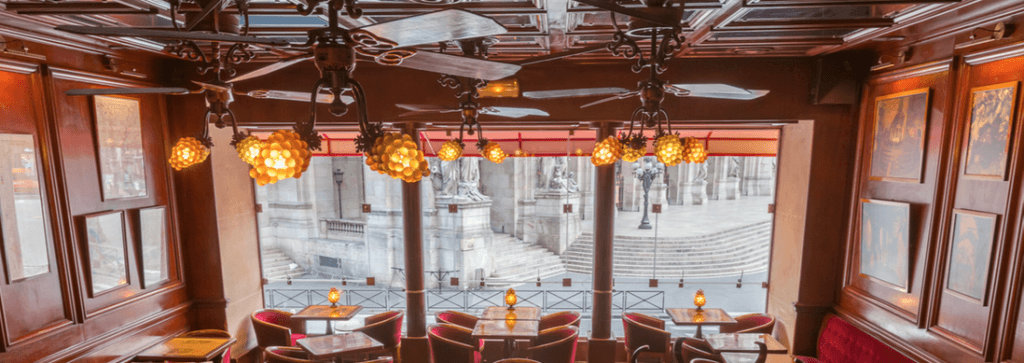
Opposite the Opéra, a setting worthy of the show
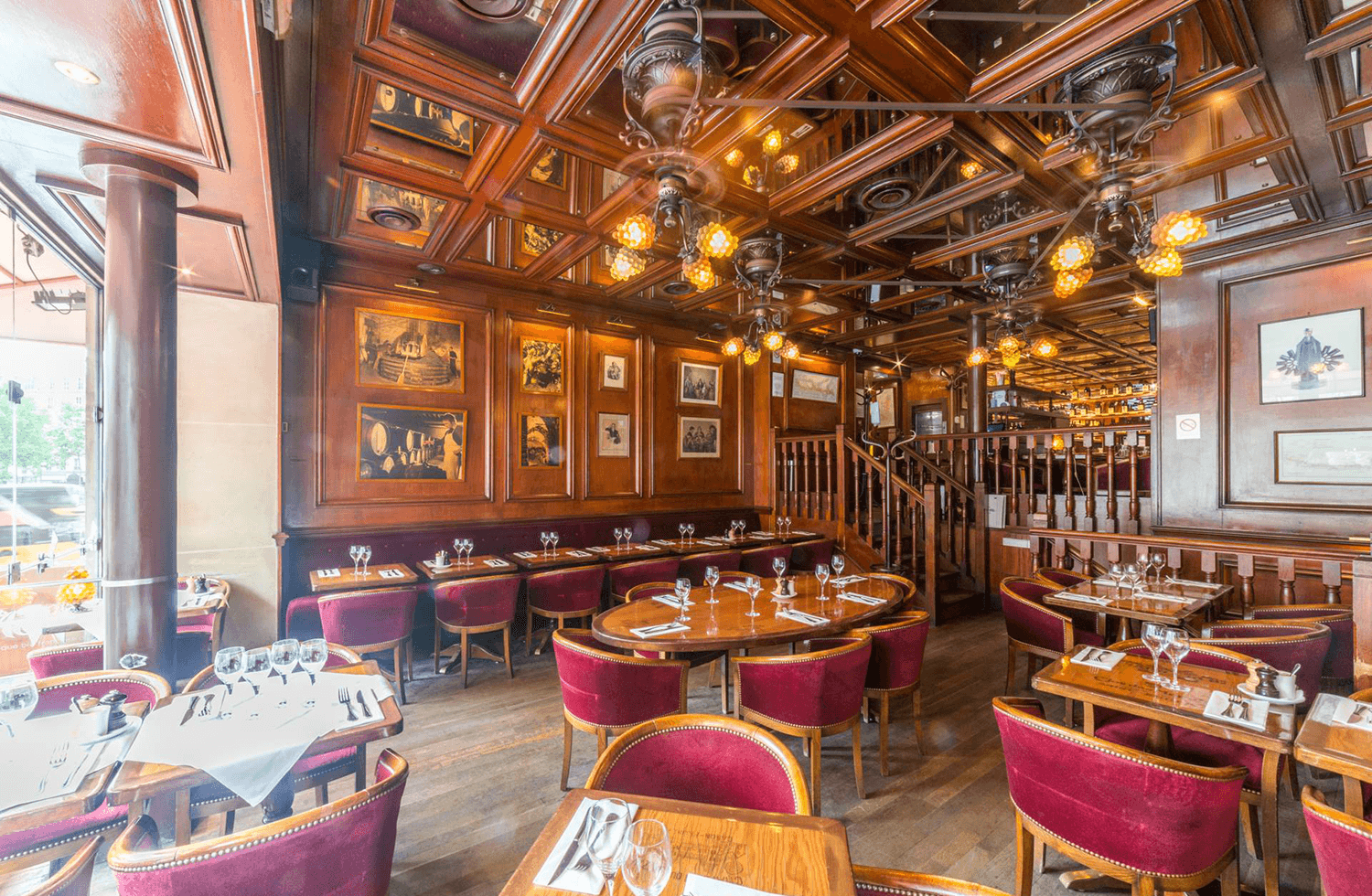
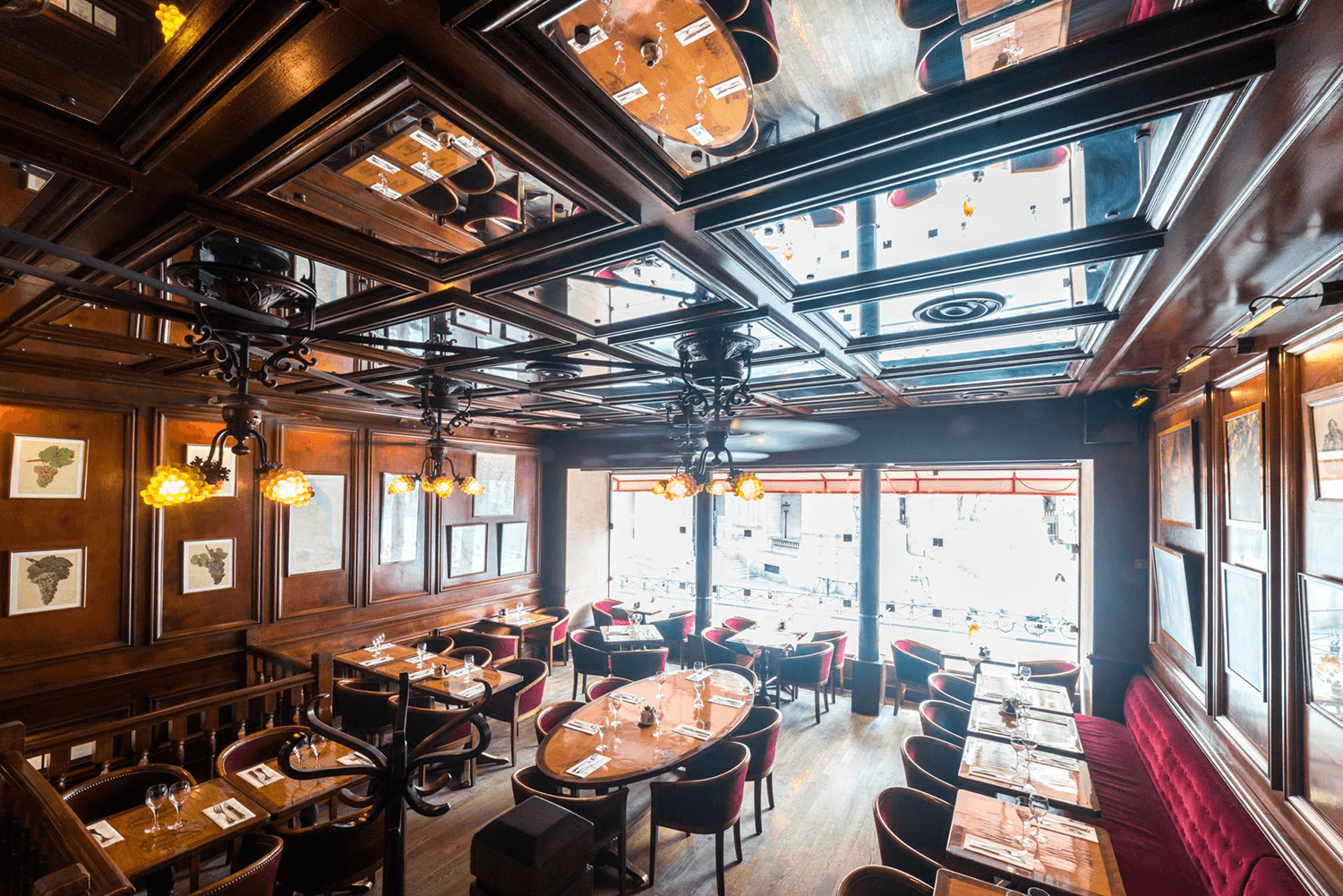
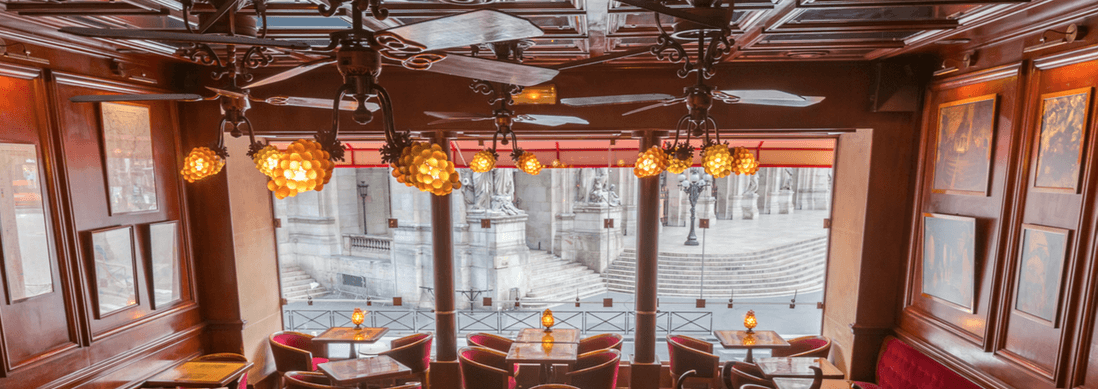
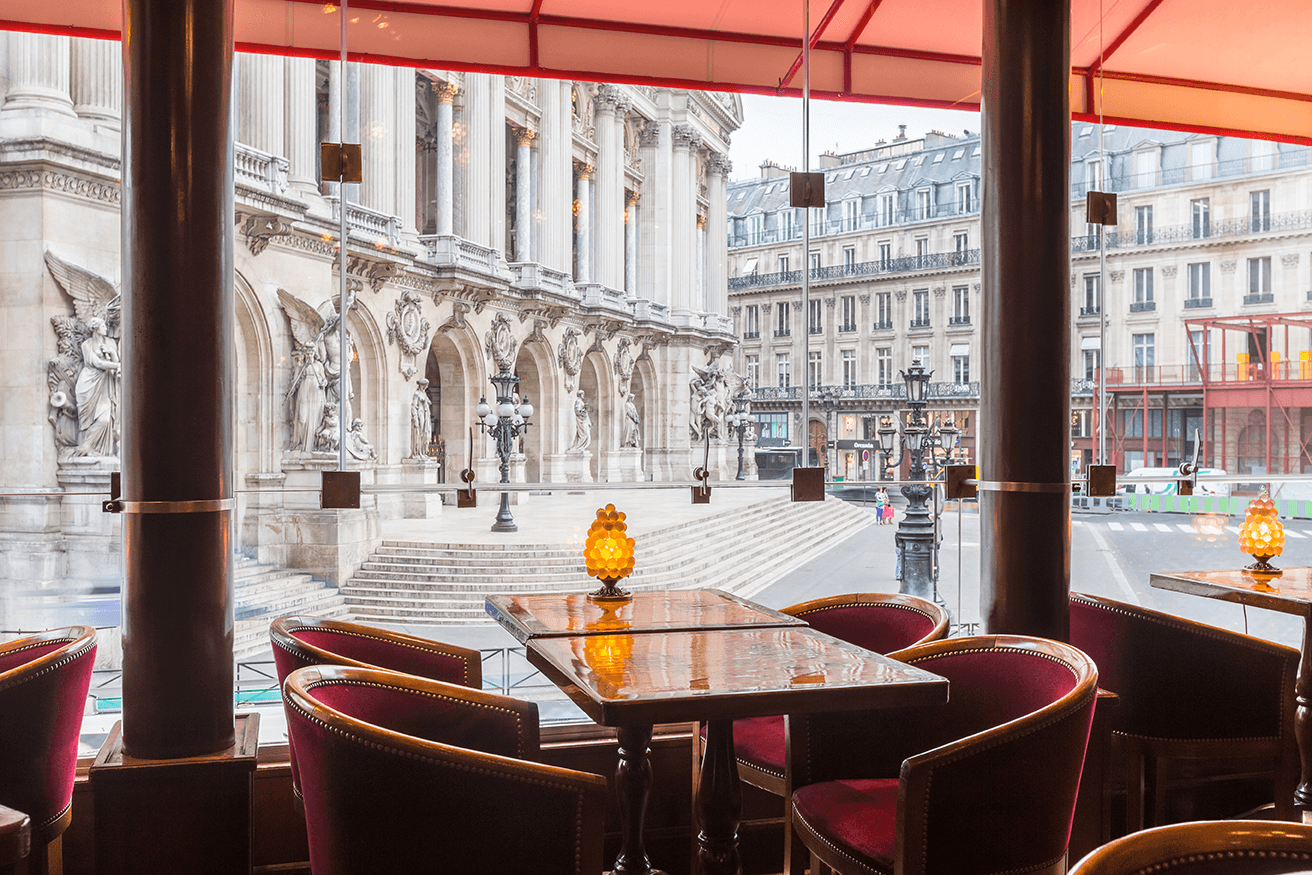
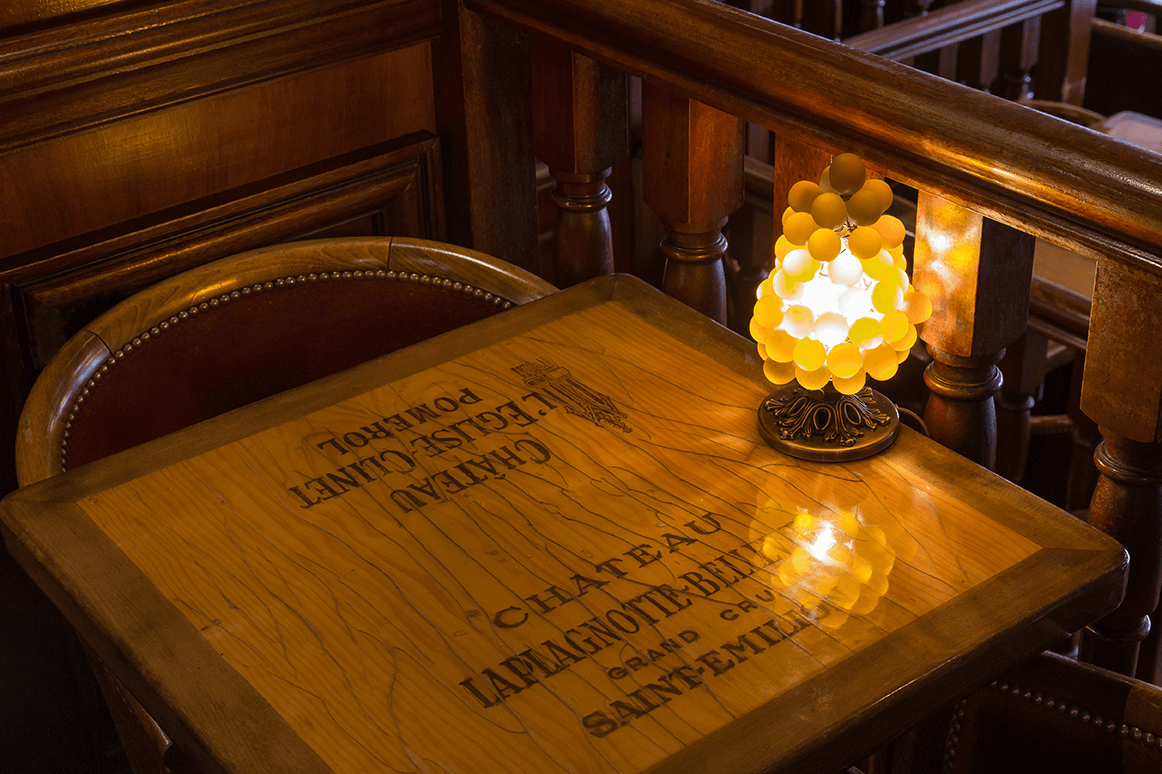
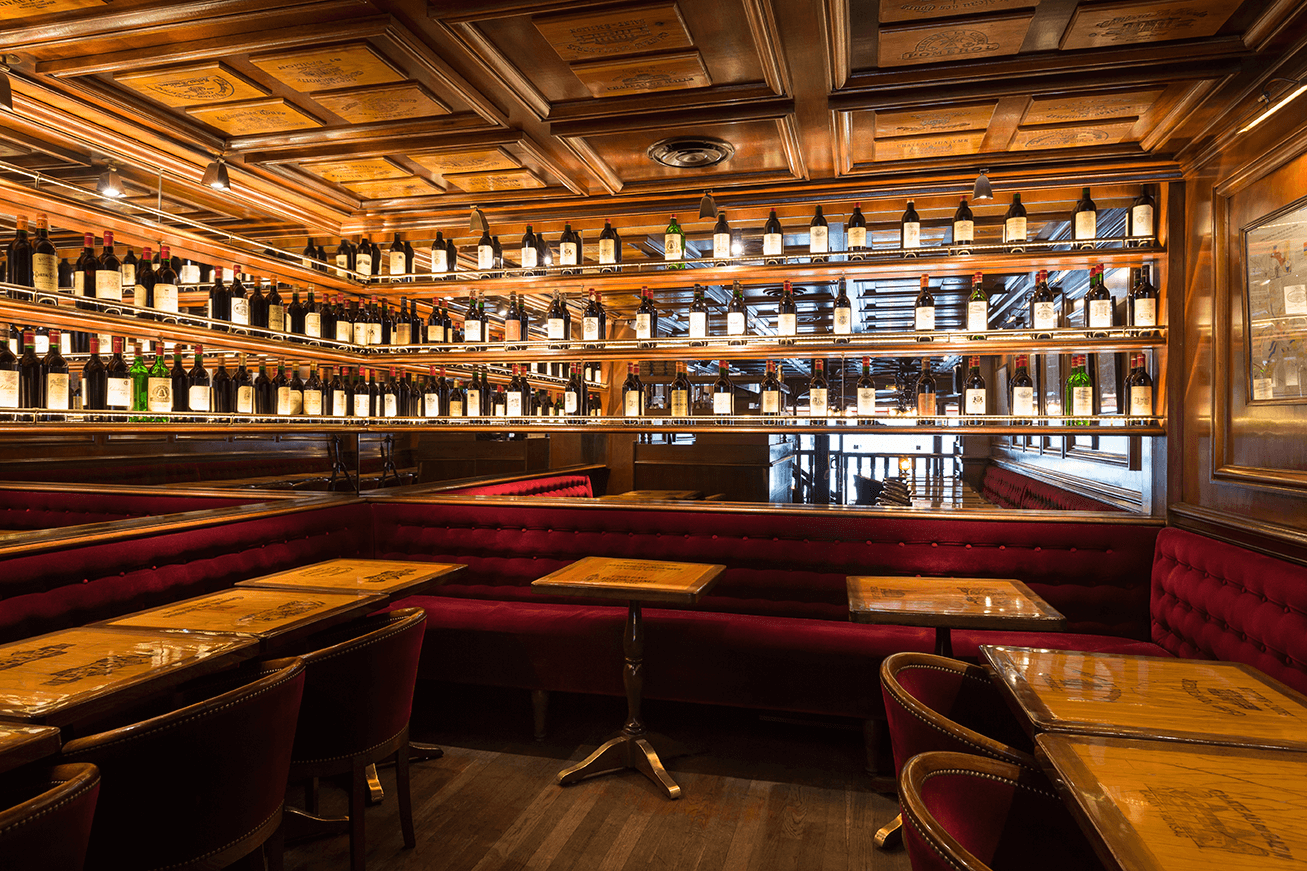
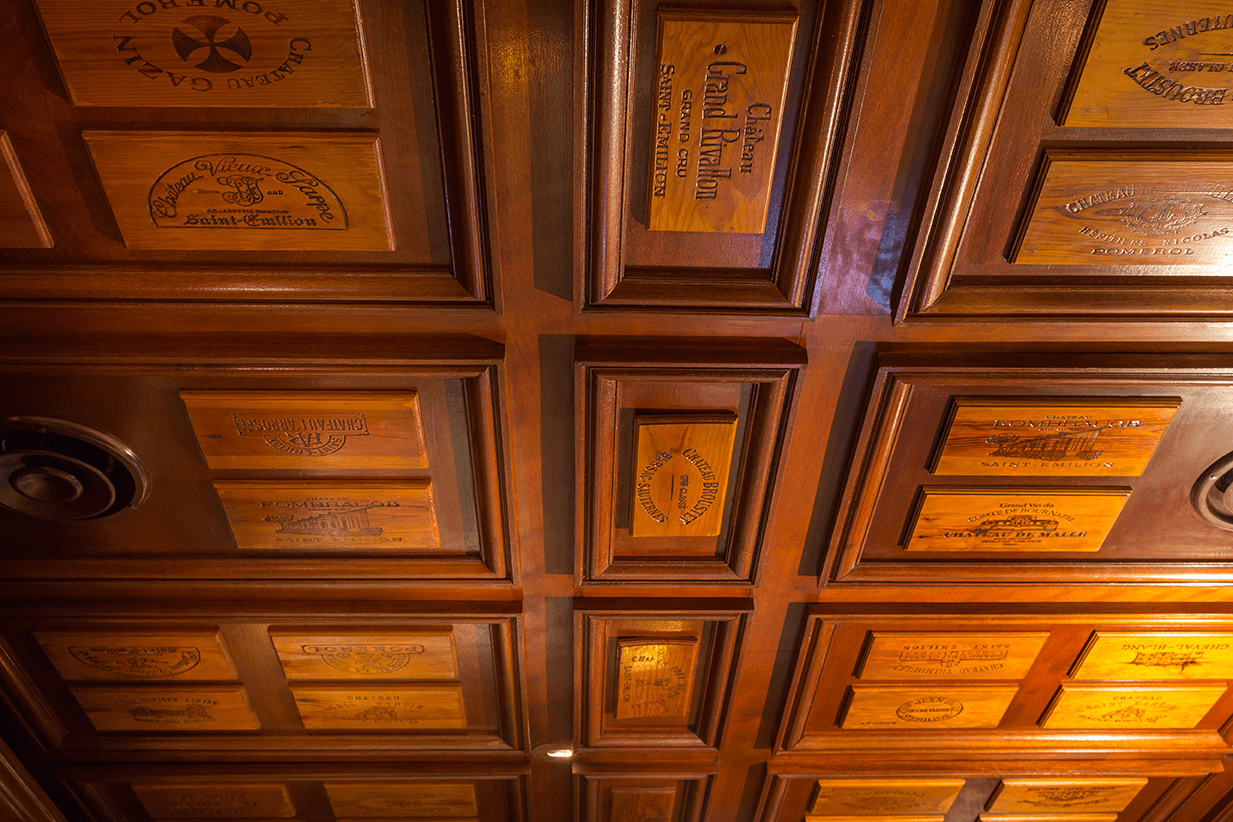
This charming restaurant was designed by Slavik as a warm, intimate wooden jewel box, whose first floor offers a sweeping view of the Opéra Garnier. The entire decor is conceived around the theme of wine, with vineyard estate stamps pyrographed onto the tables and the coffered ceilings.
Wine bottles are showcased on backlit shelves—a system Slavik had made fashionable for the bottle libraries behind bar counters.
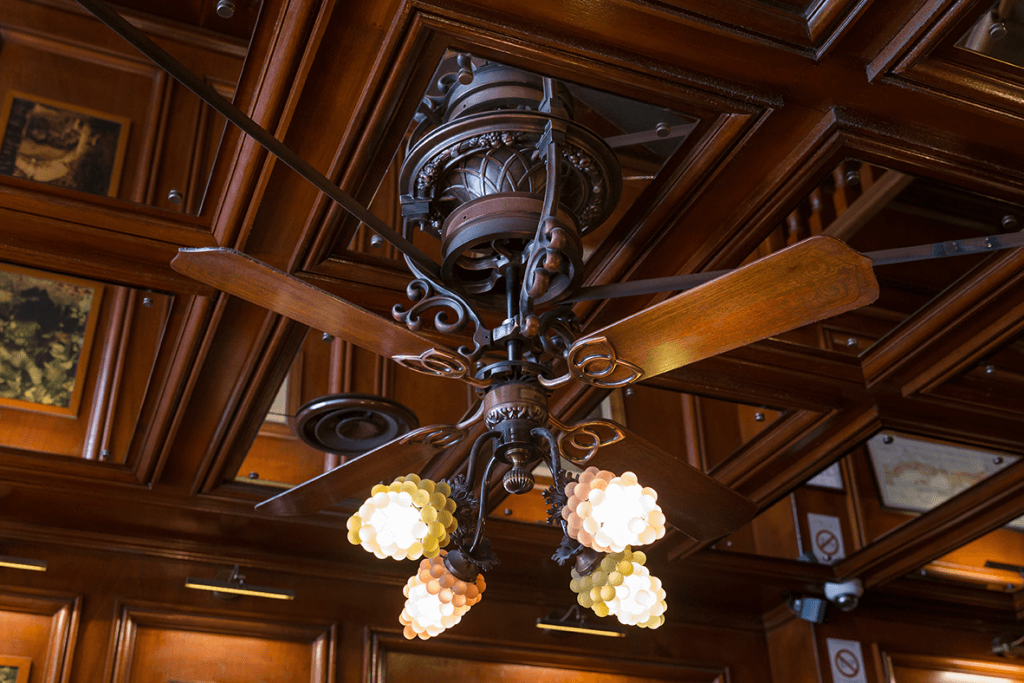
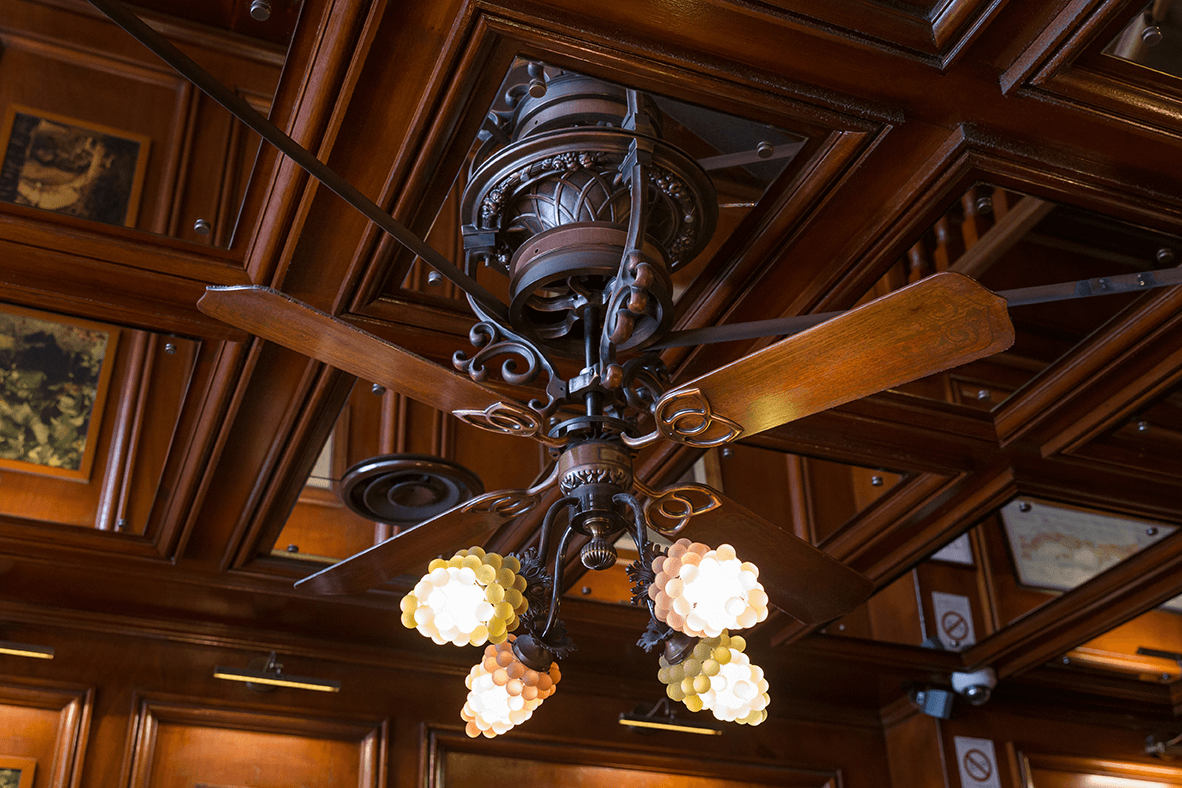
The ceilings are punctuated by “chandeliers” made from American fans supporting clusters of luminous Murano glass grape beads, driven by a belt system powered by an exposed motor—a reminder of the stage machinery of opera or theatre sets.
The grape-cluster glass-bead light fixtures, crafted by Venetian glassmakers, are also mounted as table lamps.
Location
1, rue Auber, 75009 Paris
The fan trend
Slavik started the fan trend, very useful at a time when air conditioning was not widespread. He had them shipped from the United States. They were belt-driven fans. When the first belt starts up, setting the blades of the first fan spinning, the motion spreads from one to the next until all the fans are running. The trend first caught on among professionals, creating demand among private clients.
The story of the grape-cluster lamps
Slavik always worked with Murano glassmakers in Venice, which he visited often. One day on the island of Murano, accompanied by Jean-Pierre Lorence, Slavik stopped in front of small decorative grape clusters to place on tables on festive days. He decided to have them made into lamps with much larger glass beads and placed an order with the Barovier glassworks. They produced the large glass beads and assembled them one by one on wire. Then in Paris, the Kobis and Lorence firm made the bases and wired the clusters.